
News
by Dan Jarvis
Table of Contents
Abstract
Emergency Medical Technicians (EMTs) and paramedics serve as critical components of the United States emergency response system, providing lifesaving medical interventions during some of the most traumatic moments experienced by individuals, families, and communities. Unlike many healthcare professionals, EMS providers encounter trauma in uncontrolled environments where uncertainty, danger, limited resources, and emotional intensity are constant occupational realities. Repeated exposure to traumatic events—including violent injuries, bloodborne pathogen risks, sudden death, suicide incidents, pediatric emergencies, infant drownings, and unsuccessful resuscitations—creates a unique psychological burden. That burden goes Beyond the Call.
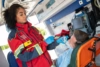
Although EMS professionals are trained to manage the medical consequences of trauma, they often receive limited preparation for the cumulative emotional and physiological impact of repeated exposure. This occupational exposure has been associated with increased rates of posttraumatic stress disorder (PTSD), depression, burnout, sleep disruption, substance misuse, and suicidal thoughts and behaviors. Research indicates that paramedics experience elevated PTSD risk compared with the general population, with occupational stressors, poor sleep, and limited social support identified as important contributing factors.
This article examines the complex relationship between EMS trauma exposure, occupational stress, family impact, suicide risk, and the need for resilience-based interventions designed specifically for emergency medical professionals.
Keywords: emergency medical services, EMT, paramedic, PTSD, suicide prevention, occupational trauma, first responder mental health, resilience, burnout
Introduction
Emergency Medical Technicians and paramedics represent one of the most essential and psychologically demanding professions within the public safety and healthcare systems. Every shift requires providers to enter unpredictable environments, rapidly assess life-threatening conditions, make critical decisions with incomplete information, and provide compassionate care during moments of extreme human suffering.
EMS professionals respond when people are experiencing:
- Medical emergencies
- Severe injuries
- Violence
- Accidents
- Sudden death
- Suicide attempts
- Pediatric emergencies
- Community disasters
The public often sees the lifesaving outcome.
They rarely see what the EMS provider carries afterward.
A paramedic may successfully save a patient’s life during one call and then respond hours later to an infant drowning, a suicide attempt, or a fatal motor vehicle collision. The human nervous system was not designed to repeatedly encounter traumatic experiences without consequences.
The challenge facing EMS professionals is not a lack of strength.
It is the biological and psychological cost of repeatedly witnessing human suffering.
The Unique Nature of Trauma Exposure in EMS
Acute Trauma Versus Cumulative Trauma
Many discussions surrounding trauma focus on single catastrophic events.
However, EMS professionals often experience cumulative occupational trauma.
A single critical incident may be distressing.
A career filled with thousands of distressing incidents creates a different psychological environment.
EMS providers may accumulate exposure through:
- Hundreds of traumatic patient encounters
- Repeated exposure to death and dying
- Witnessing family grief
- Performing unsuccessful lifesaving interventions
- Managing emotionally intense scenes
- Carrying memories of patients who did not survive
This repeated exposure may contribute to what researchers describe as occupational stress injuries.
Bloodborne Pathogen Exposure and Invisible Occupational Threats
Unlike many other first responders, EMS providers routinely experience direct contact with human biology during emergency care.
Occupational risks include exposure to:
- Blood
- Bodily fluids
- Needlestick injuries
- Infectious diseases
- Contaminated environments
Bloodborne pathogen exposure creates a unique form of stress because the threat may not be immediately visible.
After an exposure incident, providers may experience:
- Fear of infection
- Anxiety while awaiting testing results
- Concern about family exposure
- Sleep disruption
- Hypervigilance regarding symptoms
The psychological impact may continue even when the medical risk is eventually determined to be low.
The body remembers perceived threats.
Pediatric Trauma and Infant Emergencies: The Emotional Weight of the Unimaginable
Among the most psychologically difficult calls EMS professionals encounter are pediatric emergencies.
Children represent a unique vulnerability because they challenge deeply held human expectations about safety, innocence, and the natural order of life.
Examples include:
- Infant drownings
- Sudden infant death responses
- Pediatric cardiac arrests
- Child abuse cases
- Severe childhood injuries
A provider may intellectually understand the medical circumstances while still experiencing profound emotional distress.
Many EMS professionals report that pediatric deaths are among the calls they remember most throughout their careers.
These incidents may create:
- Intrusive memories
- Emotional distress
- Difficulty sleeping
- Questioning of professional effectiveness
- Survivor guilt
The question often becomes:
“Could I have done something differently?”
even when the provider performed exactly according to training and protocol.
Suicide Calls and the Burden of Repeated Exposure
EMS professionals frequently respond to suicide attempts, self-harm incidents, and completed suicides.
These calls create unique psychological challenges because they involve:
- Human suffering
- Emotional intensity
- Family devastation
- Feelings of helplessness
- Exposure to preventable death
Unlike many medical emergencies, suicide calls often carry an additional emotional burden because providers may struggle with questions surrounding meaning, prevention, and suffering.
Repeated exposure may contribute to:
- Compassion fatigue
- Emotional exhaustion
- Secondary traumatic stress
- Increased vulnerability to depression and PTSD symptoms
The EMS provider must simultaneously perform clinically while managing the emotional impact of the situation.
The Psychological Impact of Death and Failed Resuscitation
Emergency medical professionals are trained to save lives.
However, many calls end with death.
Providers may experience repeated exposure to:
- Cardiac arrests
- Traumatic deaths
- Mass casualty incidents
- Terminal illness
- End-of-life emergencies
One of the most difficult aspects of EMS work is the reality that sometimes every intervention is performed correctly, yet the patient does not survive.
This creates a complicated emotional experience.
Providers may understand the medicine while still feeling:
- Grief
- Frustration
- Sadness
- Helplessness
- Personal responsibility
The difference between knowing something professionally and processing it emotionally is significant.
PTSD and Trauma-Related Symptoms Among EMS Professionals
Research demonstrates that paramedics experience elevated PTSD risk compared with non-exposed populations. A systematic review and meta-analysis found that paramedics have substantially higher PTSD prevalence than general working populations, highlighting chronic exposure to traumatic events as an occupational risk factor.
Symptoms associated with PTSD may include:
- Intrusive memories
- Nightmares
- Avoidance behaviors
- Emotional numbing
- Hypervigilance
- Irritability
- Difficulty concentrating
- Sleep disruption
However, not every EMS professional who experiences trauma develops PTSD.
Protective factors may include:
- Strong peer support
- Positive family relationships
- Healthy coping skills
- Organizational support
- Resilience training
The Impact of EMS Trauma on Families
The effects of EMS trauma rarely remain confined to the workplace.
Families may experience the secondary impact of the profession through:
- Emotional withdrawal
- Irritability
- Shift-related exhaustion
- Difficulty discussing traumatic calls
- Changes in personality after critical incidents
- Sleep disruption
- Reduced family engagement
A spouse or family member may notice:
“Something changed after that call.”
Yet the EMS professional may struggle to explain what happened because many experiences are difficult to describe.
Families often carry the unseen consequences of the profession.
The Suicide Problem Among EMTs and Paramedics
Suicide among first responders, including EMTs and paramedics, represents a serious occupational health concern.
EMS professionals experience multiple known suicide risk factors, including:
- Repeated trauma exposure
- PTSD symptoms
- Depression
- Sleep disruption
- Occupational burnout
- Access to lethal means
- Workplace stigma
- Emotional isolation
A systematic review examining suicidal thoughts and behaviors among first responders identified EMTs and paramedics as populations experiencing significant occupational stressors associated with increased risk for mental health challenges and suicidal behaviors.
Why EMS Professionals May Not Ask for Help
EMS culture often values:
- Toughness
- Independence
- Reliability
- The ability to function during crisis
These characteristics make excellent providers.
However, they may also create barriers.
Some providers fear:
- Being viewed as weak
- Losing respect from coworkers
- Career consequences
- Being removed from duty
- Burdening others
The result can be dangerous silence.
The provider who encourages a patient to seek help must also understand that they deserve the same opportunity.
Building a Culture of EMS Resilience
The future of EMS wellness requires moving beyond waiting until providers reach crisis.
A proactive resilience model includes:
Education
Understanding how trauma affects the brain and nervous system.
Peer Support HEAL HERE
Developing culturally competent support among EMS professionals.
Recovery Training TRUSA ORGANIZATIONAL TRAINING
Teaching skills to regulate stress after traumatic exposure.
Leadership Responsibility
Creating environments where asking for help represents professionalism.
Family Inclusion
Recognizing families as part of the resilience system.
Conclusion
Emergency Medical Technicians and paramedics are entrusted with humanity’s most vulnerable moments. They respond to suffering that most people will never witness and make lifesaving decisions under unimaginable pressure.
The cost of this responsibility is often carried silently.
Bloodborne pathogen exposure, pediatric deaths, infant drownings, suicide responses, traumatic injuries, and repeated exposure to death create a complex occupational trauma environment.
EMS professionals do not need to become less compassionate.
They need the skills, support, and resources necessary to sustain compassion throughout a career.
The strongest EMS systems are not those where providers never struggle.
They are those where providers know they do not have to struggle alone.
Train the mind.
Control the response.
Elevate performance.
References
Germain, A. (2013). Sleep disturbances as the hallmark of PTSD: Where are we now? American Journal of Psychiatry, 170(4), 372–382.
Johnston, B., Wynne, D., Threlfall, M., Gardner, K., & Campodonico, C. (2026). A systematic review of the prevalence, risk factors, and protective factors of posttraumatic stress disorder among paramedics. Journal of Traumatic Stress.
Stanley, I. H., Hom, M. A., & Joiner, T. E. (2016). A systematic review of suicidal thoughts and behaviors among police officers, firefighters, EMTs, and paramedics. Clinical Psychology Review, 44, 25–44.
Wagner, S. L., White, N., Fyfe, T., et al. (2023). Work-related posttraumatic stress disorder in paramedics in comparison to data from the general population of working age: A systematic review and meta-analysis. Frontiers in Public Health, 11, 1151248.
Share
Recent Posts
August 7, 2026
Beyond the Call: The Complexities of Trauma Exposure, Occupational Stress, and Suicide Risk Among Emergency Medical Technicians and Paramedics in the United States.
by Dan Jarvis Abstract Emergency Medical Technicians (EMTs) and paramedics serve as critical components of the United States emergency response system, providing lifesaving...

July 31, 2026
Beyond Survival: Active-Duty Military Suicide, Operational Trauma, and the Potential Role of Trauma Resiliency Protocol–Performance Recovery (TRP-PR) Across the Spectrum of Military Operations
Abstract Military Suicide among active-duty members of the United States Department of War remains one of the most significant threats to military readiness,...

July 24, 2026
Coping Strategies for Sleep Deprivation in First Responders
Sleep Deprivation in First Responders: Impacts on Operational Performance, Personal Safety, Occupational Health, and Maladaptive Coping Strategies Abstract Sleep deprivation is one of...