
News
Table of Contents
Abstract
Military Suicide among active-duty members of the United States Department of War remains one of the most significant threats to military readiness, force preservation, and long-term operational effectiveness. Despite unprecedented investments in behavioral health services, resilience initiatives, embedded mental health providers, and suicide prevention campaigns, suicide rates among active-duty service members have remained a persistent concern over the past decade. Military service members experience repeated exposure to operational stressors including combat, moral injury, cumulative trauma, sleep deprivation, relationship strain, leadership pressures, and prolonged physiological activation. These factors are particularly relevant within high-tempo operational communities, including Special Operations Forces (SOF), where repeated deployments, sustained readiness requirements, and chronic exposure to high-risk missions may increase cumulative stress burden.
This article reviews current evidence regarding military suicide, examines the limitations of reactive mental health models, and explores Trauma Resiliency Protocol–Performance Recovery (TRP-PR) as a promising, scalable, resilience-focused intervention that may complement existing Department of Defense behavioral health strategies. Particular attention is given to the emerging Arizona State University evaluation of the Trauma Resiliency Protocol (TR-P), which demonstrated significant reductions in PTSD symptom severity among 128 current and former law enforcement officers following participation, supporting further investigation of similar resilience-based interventions in military populations.
Keywords: military suicide, Department of Defense, operational stress, Special Operations Forces, PTSD, resilience, TRP-PR, military readiness HEAL HERE
Introduction
The strength of the United States Armed Forces has historically been measured through combat capability, technological superiority, leadership, and force readiness. Increasingly, however, one of the greatest threats to military readiness originates not from enemy action, but from psychological injury and suicide within the force.
Recent Department of Defense reports continue to identify suicide as a major force health protection challenge. Although the number of suicides declined in 2024 compared with the previous year, long-term trends remain concerning, particularly among active-duty personnel. Most deaths occur among young enlisted service members, and many involve co-occurring mental health conditions, relationship stressors, occupational challenges, or multiple interacting risk factors.
These findings demonstrate that suicide is not solely an individual behavioral health issue; it is also a readiness issue affecting unit cohesion, operational capability, family stability, and force preservation.
The Operational Burden of Military Service
Military service requires repeated adaptation to environments characterized by uncertainty, danger, and prolonged physiological stress.
Operational stressors include:
- Combat exposure
- Repeated deployments
- Moral injury
- Sleep deprivation
- Hypervigilance
- Separation from family
- Leadership responsibility
- High operational tempo
- Traumatic loss of teammates
- Exposure to severe human suffering
While each of these experiences may be manageable independently, cumulative exposure across a military career can substantially increase psychological burden.
Modern neuroscience suggests that repeated activation of the body’s survival systems can alter emotional regulation, sleep quality, cognitive performance, and stress recovery mechanisms.
The challenge is not that military personnel experience stress.
The challenge is that many experience repeated activation of survival physiology without sufficient opportunities to fully recover.
Special Operations Forces and Cumulative Operational Stress
Members of the United States Special Operations community—including Army Special Forces, Rangers, Navy SEALs, Marine Raiders, Air Force Special Tactics, and other special mission units—operate in environments characterized by sustained readiness, repeated deployments, complex missions, and extraordinary performance expectations.
These communities frequently experience:
- Multiple combat deployments
- High operational tempo
- Repeated exposure to death and severe injury
- Responsibility for strategic missions
- Leadership under extreme pressure
- Long-term separation from family
- Chronic sleep disruption
Although available evidence does not conclusively establish higher suicide rates across every SOF community compared with the conventional force, military leaders and researchers have expressed continued concern regarding the cumulative impact of repeated operational stress, traumatic exposure, and barriers to seeking care within elite military organizations.
Operational excellence does not provide immunity from psychological injury.
Indeed, the very characteristics that produce elite performance—discipline, self-reliance, perseverance, and mission focus—may also delay help-seeking when psychological distress develops.
Suicide as a Readiness Problem
Military suicide is often discussed primarily as a behavioral health issue.
Equally important is understanding suicide as a readiness challenge.
Each suicide affects:
- Unit cohesion
- Team performance
- Mission capability
- Leadership effectiveness
- Family readiness
- Recruitment and retention
The loss of a highly trained service member represents not only a personal tragedy but also the loss of years of operational experience, institutional knowledge, and specialized training.
Preventing suicide therefore contributes directly to force readiness.
Limitations of Reactive Mental Health Models
The Department of Defense has substantially expanded behavioral health resources over the past two decades.
These efforts include:
- Embedded behavioral health teams
- Chaplain services
- Psychological health programs
- Suicide prevention initiatives
- Peer support
- Leadership education
These programs remain essential.
However, many interventions occur after symptoms have become clinically significant.
High-risk professions require additional emphasis on proactive resilience development before psychological injuries become disabling.
Just as military personnel routinely train physical readiness before combat, psychological readiness should receive comparable emphasis.
Trauma Resiliency Protocol–Performance Recovery (TRP-PR): A Preventive Operational Framework TRUSA ORGANIZATIONAL TRAINING
Trauma Resiliency Protocol–Performance Recovery (TRP-PR) is founded on the principle that traumatic stress affects both the brain and the body. Rather than focusing exclusively on symptom reduction, the model emphasizes restoration of physiological regulation, psychological flexibility, and operational performance following exposure to traumatic events.
The framework seeks to strengthen the service member’s capacity to:
- Recognize stress responses
- Regulate autonomic activation
- Improve emotional regulation
- Restore performance following trauma
- Enhance long-term operational readiness
Importantly, TRP-PR complements rather than replaces evidence-based psychotherapy, medical treatment, or command-directed behavioral health services.
Its potential value lies in providing scalable resilience skills that can be integrated throughout the military career continuum—from accession training through deployment cycles and transition.
Emerging Evidence Supporting Trauma Resiliency Protocol
Evidence supporting resilience-based interventions continues to grow. Arizona State University TRP-PR Study
A peer-reviewed pilot study conducted by researchers affiliated with Arizona State University evaluated the Trauma Resiliency Protocol (TR-P) among 128 current and former law enforcement officers experiencing PTSD symptoms. Using a retrospective pre/post design, investigators reported statistically significant reductions in PTSD symptom severity following participation in the protocol.
The authors concluded that the findings support further evaluation through larger randomized controlled trials while recognizing the intervention’s promise for populations routinely exposed to cumulative trauma. Although the study involved law enforcement rather than military personnel, both professions share repeated exposure to operational stress, life-threatening environments, hypervigilance, and cumulative traumatic experiences, making the findings relevant for future military investigation.
A Scalable Model Across the Full Spectrum of Military Operations
One of the greatest challenges facing military behavioral health is scalability.
Any intervention intended to improve readiness across the Total Force must be capable of reaching:
- Initial entry training
- Operational units
- Special Operations Forces
- Conventional forces
- National Guard
- Reserve Components
- Overseas contingency operations
- Garrison environments
- Family readiness programs
TRP-PR offers a conceptual framework that could potentially be delivered across multiple levels of military education and operational training.
Rather than waiting until symptoms become severe, resilience skills could be integrated into:
- Leadership development
- Pre-deployment preparation
- Post-deployment reintegration
- Unit resilience training
- Peer support education
- Family readiness initiatives
Such integration would align psychological readiness with existing models of physical readiness and tactical proficiency.
Future Research Directions
The encouraging findings associated with TRP-PR warrant additional investigation within military populations.
Future research should include:
- Randomized controlled trials
- Multi-service studies
- Special Operations cohorts
- Longitudinal outcome evaluation
- Operational performance measures
- Readiness metrics
- Family functioning outcomes
- Cost-effectiveness analyses
Scientific evaluation is essential to determine whether resilience-based interventions such as TRP-PR improve operational readiness, reduce PTSD symptoms, enhance retention, and contribute to suicide prevention.
Conclusion
Military suicide remains one of the most significant threats to force readiness in the modern era.
Although behavioral health services remain indispensable, the complexity of military operational stress requires complementary approaches that emphasize prevention, resilience, physiological regulation, and long-term recovery.
Trauma Resiliency Protocol–Performance Recovery represents a promising resilience-based framework worthy of continued scientific evaluation. Emerging evidence from law enforcement populations provides encouraging preliminary findings and supports further investigation within military settings.
If future research demonstrates similar effectiveness among active-duty service members, TRP-PR may become a scalable component of a comprehensive readiness strategy capable of supporting service members across the full spectrum of military operations—at home, in training, and in combat.
Ultimately, preserving the force requires more than preparing warfighters for combat.
It requires preparing them for recovery.
References
Department of Defense. (2025). Annual report on suicide in the military. U.S. Department of Defense.
Maguire, E. R., De Andrade, T. M., & Melchor, B. (2024). A pilot study of a Trauma Resiliency Protocol for law enforcement officers with posttraumatic stress disorder symptoms. Journal of Occupational and Environmental Medicine, 66(8), 662–665. https://doi.org/10.1097/JOM.0000000000003131
National Center for PTSD. (2023). PTSD and military service. U.S. Department of Veterans Affairs.
U.S. Department of Defense. (2024). Defense suicide prevention annual report.
Share
Recent Posts
August 7, 2026
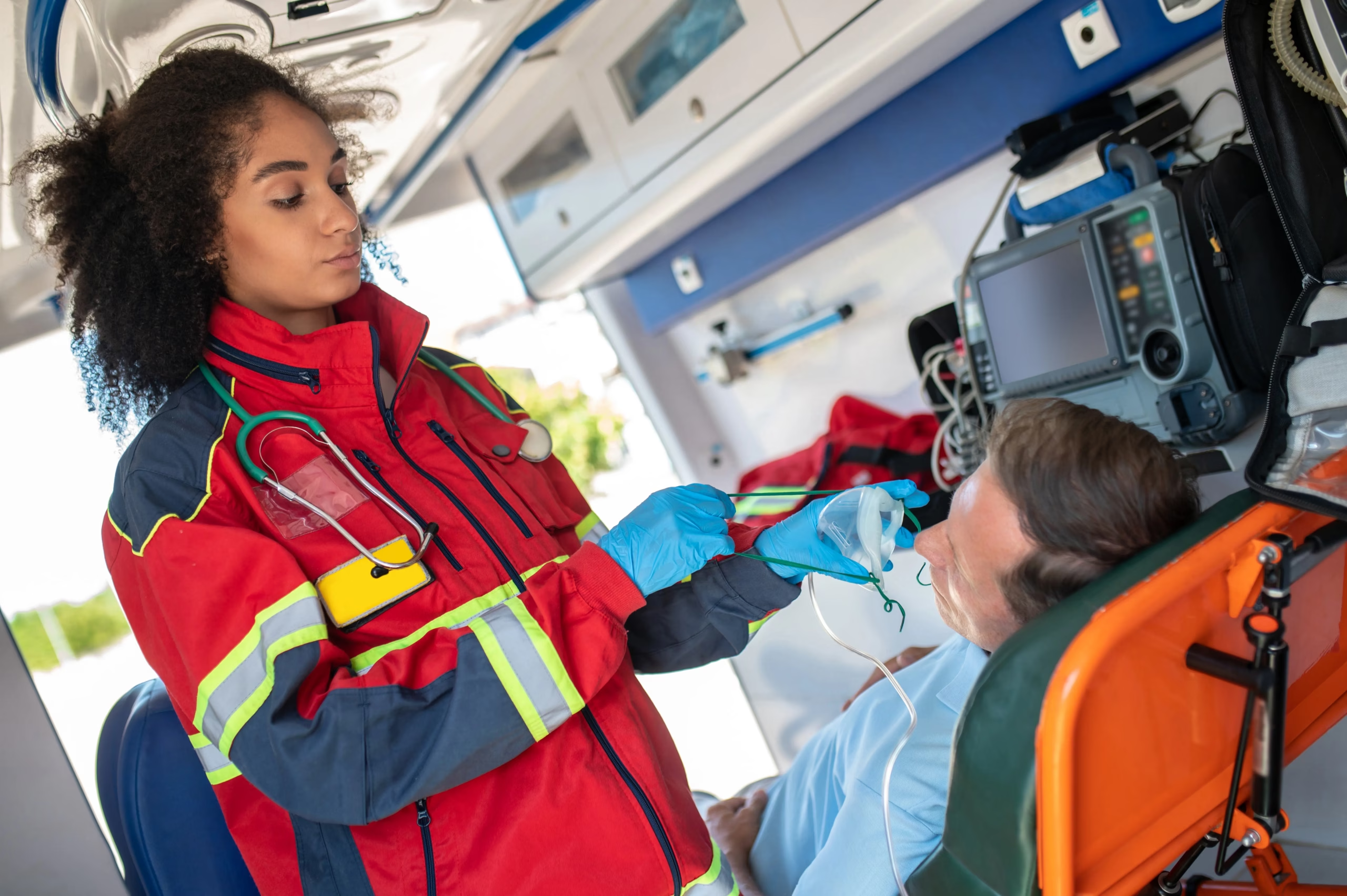
Beyond the Call: The Complexities of Trauma Exposure, Occupational Stress, and Suicide Risk Among Emergency Medical Technicians and Paramedics in the United States.
by Dan Jarvis Abstract Emergency Medical Technicians (EMTs) and paramedics serve as critical components of the United States emergency response system, providing lifesaving...
July 31, 2026
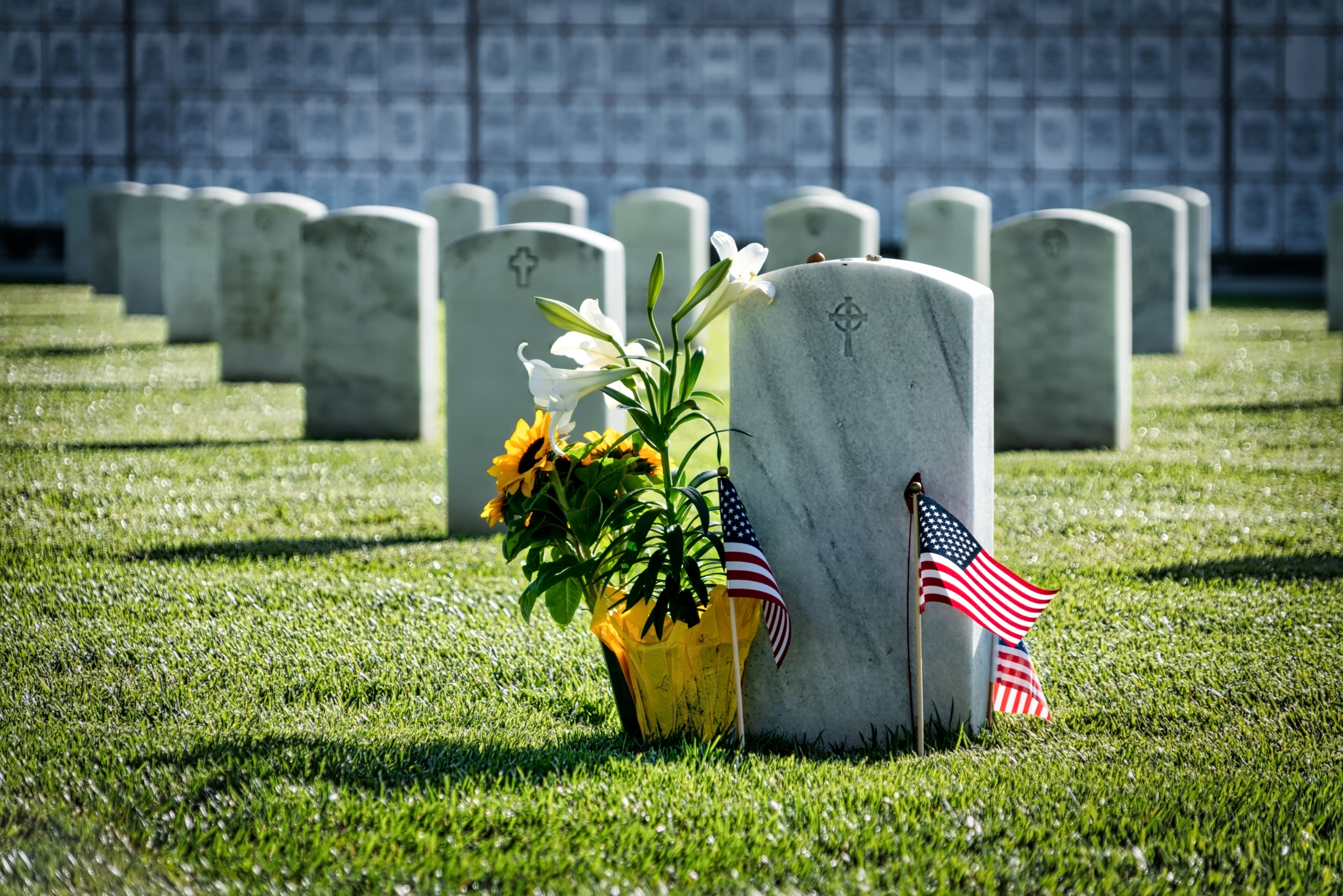
Beyond Survival: Active-Duty Military Suicide, Operational Trauma, and the Potential Role of Trauma Resiliency Protocol–Performance Recovery (TRP-PR) Across the Spectrum of Military Operations
Abstract Military Suicide among active-duty members of the United States Department of War remains one of the most significant threats to military readiness,...

July 24, 2026
Coping Strategies for Sleep Deprivation in First Responders
Sleep Deprivation in First Responders: Impacts on Operational Performance, Personal Safety, Occupational Health, and Maladaptive Coping Strategies Abstract Sleep deprivation is one of...